

AI Comes to Home Automation: What Will Really Change in Buildings?
The future of smart buildings lies in integrating automation, energy management and artificial intelligence.
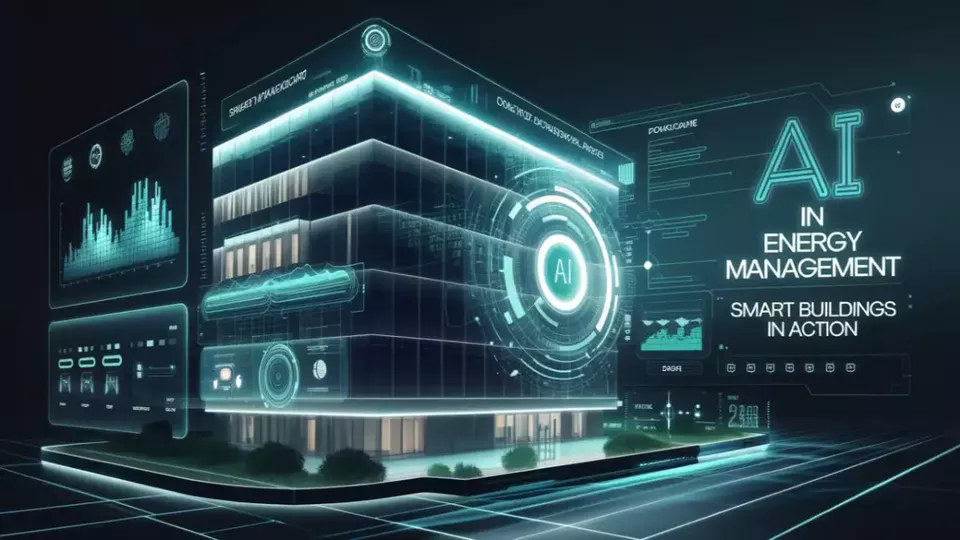
AI TRANSFORMS HOME AUTOMATION
Home and building automation has evolved enormously in recent years. What once seemed to be reserved for luxury homes is now part of many residential projects, hotels, offices and commercial buildings.
But we are now entering a new stage: the combination of building automation and artificial intelligence (AI).
Until now, most automation systems have operated through predefined rules: if presence is detected, the lights turn on; if the temperature exceeds a certain value, the HVAC system is activated; if there is surplus photovoltaic energy, a specific load is switched on.
Artificial intelligence takes this one step further.
From reacting to anticipating
A traditional system responds to predefined conditions. An intelligent system can analyse large amounts of information and identify behavioural patterns.
Temperature, presence, schedules, energy consumption, photovoltaic production, outdoor conditions and the way different spaces are used are some of the data that can be used to improve building management.
The objective is therefore no longer simply to automate, but to enable the building to make better decisions.
For example, a system could learn the usage patterns of a home or hotel and optimise the HVAC system in advance, achieving the required level of comfort while using as little energy as possible.
AI, building automation and energy efficiency
One of the areas where this technology could have the greatest impact is energy management.
The integration of photovoltaic systems, batteries, heat pumps, HVAC, lighting, electric vehicle chargers and control systems makes it possible to manage energy consumption as a whole.
Artificial intelligence can help determine when it is more efficient to consume, store or shift certain loads, taking into account both the building's requirements and the available energy production.
The result can be a more efficient building, but also a more comfortable one that is better adapted to the real needs of its users.
What role will KNX play?
Systems such as KNX remain a fundamental part of achieving professional and reliable building automation.
Artificial intelligence does not replace good engineering or a properly designed installation. On the contrary, it requires reliable data and systems capable of executing the decisions that are made.
Sensors, actuators, HVAC, lighting, blinds, energy management and other systems must be properly designed and integrated.
The future is therefore not simply about adding artificial intelligence to an installation, but about combining engineering, automation, data and intelligence.
Towards truly intelligent buildings
The trend is clear: the buildings of the future will not simply execute programmed commands.
They will be able to understand what is happening, analyse the available information and adapt their operation to achieve greater comfort and improved energy efficiency.
In this scenario, building automation becomes much more than a tool for controlling systems. It becomes a fundamental part of intelligent building management.
The real evolution is not about having more devices, but about making all of them work together intelligently.
Over the coming years, the combination of building automation, artificial intelligence and energy management will transform the way we design, use and manage our buildings.